15. Dorset Gardens Pricing Updates: Direct Developer Price List Registration
When a new condo launch is tied to a government land sale site, the early marketing usually moves in step with a very practical question buyers ask straight away: what do the units actually cost, and how do I get the official numbers in time to make a decision?
That’s where “direct developer price list registration” becomes more than marketing language. It’s the gate for the price list that buyers want during the critical window between a project being introduced and when actual selections start. For people tracking Dorset Gardens, this pricing update workflow is especially relevant because the project sits in a location that is already familiar to many buyers, and the demand tends to build quickly once confirmed launch information starts appearing.
Below, I’ll walk through what we can say with confidence about Dorset Gardens, what is known about the project background, and how to approach direct developer price list registration in a way that protects your time and your negotiating position.
Dorset Gardens in plain terms: what the project is and where it sits
Dorset Gardens is the marketing name being used for an upcoming new condominium on Dorset Road in Singapore’s District 8, near Farrer Park MRT. In other words, you’re not looking at a generic “new launch in the outskirts” situation. District 8 location dynamics, plus proximity to a known MRT node, are exactly the type of factors that typically accelerate buyer interest once pricing becomes available.
From what has been publicly described, the project is associated with a Dorset Road GLS site that was won by a consortium. The winning bid figure that has been reported for the site was S$524.3 million, which works out to S$1,338 psf ppr based on the stated psf methodology for that bid. That won land price matters because it shapes the cost base the developer side uses when they build the early price list, even if the final launch pricing can still vary by unit mix, stacks, and internal pricing strategy.
The consortium reported for the Dorset Road site is UOL-led, with Singapore Land Group (SingLand) and Kheng Leong Company named as the other partners. One set of disclosed shareholding proportions indicates UOL at 60%, SingLand at 20%, and Kheng Leong at 20%. This gives you a clearer picture that Dorset Gardens is not a one-man marketing exercise, but a consortium-backed development where different stakeholders and execution planning are in play.
The “direct developer price list” idea, explained the way buyers actually use it
“Direct developer price list registration” usually signals a simple reality: the full price list is not meant for casual browsing. It’s released through controlled channels because (a) the developer wants to manage demand, (b) the sales team wants to confirm who is a genuine buyer or at least a qualified prospect, and (c) there are practical constraints around timing, unit availability, and launch appointment flow.
For buyers, the goal is not just to “see numbers.” It’s to see the numbers before competing buyers lock in selections, and to know whether you’re looking at a realistic budget range for your preferred unit types.
So when pricing updates start circulating for Dorset Gardens, the most useful question is not whether prices exist somewhere online, but whether you can access the proper price list through the direct developer registration route, typically alongside launch-preview or showflat appointment steps.
You’ll also notice that marketing pages for Dorset Gardens / Dorset Road GLS have been described as including dorsetsgarden.com.sg brochure downloads, price list registration, and showflat appointment booking. The important nuance here is that these are marketing pages. They are meant to capture leads and route prospects. They are not the same thing as a final, official developer announcement in the sense of a public, fully transparent PDF published for everyone at the same time.
What we know about the project build profile (and why it affects pricing expectations)
There has been public description that the development is planned as a 99-year leasehold condominium with about 428 homes across two 27-storey towers. Because the branding references vary across public project pages, you should treat this configuration description as “planned” rather than as a final, guaranteed confirmed package.
Still, even a planned build profile gives you a useful lens for how price lists usually get structured. A two-tower, mid-to-high rise condo with a sizable unit count will almost always result in:
- Multiple unit types and sizes (so the price list is not one single headline number).
- Stack-to-stack variation where views and orientation influence pricing.
- A selection timeline where earlier appointments may get better choices in terms of floor level and layout.
And in a leasehold context, buyers often care about how the lease term is framed and how it aligns with their own timeline. That’s not about speculation, it’s about the trade-off buyers actively price when they compare new condos.
How the pricing update moment changes buyer decisions
Once you start receiving “pricing updates,” buyers tend to fall into two categories.
The first group wants to move quickly because they have a shortlist of unit types, they know their financing constraints, and they are ready to commit once the price list confirms their target range.
The second group wants to wait and compare, but they still need visibility because they don’t want to get left behind if a particular stack or size becomes unavailable.
Direct developer price list registration is useful to both groups, but for different reasons.
If you are in the first group, registration is essentially your time advantage. You’re trying to remove delays between the moment pricing becomes available and the moment you can act.
If you are in the second group, registration is risk management. You reduce the chance that you are basing decisions on partial information, vague ranges, or outdated marketing claims. Instead, you’re looking at the same material that other prospects are looking at.
In practice, this also influences how you ask questions at the showflat. If you already have the price list in hand, you can focus your discussion with the sales team on specifics like unit differences, any promotional structures that are attached to the launch flow, and which stacks will likely be harder to secure.
A buyer’s checklist for direct developer price list registration
Here’s the simple reality: registration is only helpful if you do it cleanly and promptly, without creating avoidable friction. Based on what typically happens during new launch lead management, this is the checklist I recommend for Dorset Gardens pricing updates.
- Register using your real contact details and a consistent name format, so the team can match your request to your appointment records.
- Confirm whether the registration is explicitly for the “price list” release, not only for brochure or general project updates.
- Ask what the next step is immediately after registration, for example launch preview, showflat viewing, or a viewing appointment window.
- Prepare your decision criteria before you receive the price list, so you can compare unit options fast instead of recalculating from scratch.
- If you have financing constraints, be ready with your rough budget ceiling so the price list does not force a back-and-forth later.
The reason this matters is not procedural fussiness. It prevents a common scenario where people register late, get contacted after key units are already being selected, and then feel pressured into a trade-off because the unit they want is no longer available.
Why lead-controlled price lists exist, and what it means for you
Since the sources available describe marketing pages offering brochure download, price list registration, and showflat appointment booking, it is reasonable to infer the standard industry mechanics: the developer or its sales team wants a controlled channel for distributing the pricing details.
That control is not only about marketing. It directly affects fairness and clarity, because price list distribution can be tied to appointment scheduling.
In some launches, buyers who register and book earlier may get access to the price list and selection options in the sequence that aligns with the launch plan. Buyers who register later may still get the price list, but their unit choices could be more limited depending on how sales pace progresses.
This is also why “direct developer” wording can matter. When you register through an official channel, you are more likely to get the same material being used by the sales team, rather than a third-party summary of unit pricing that might be missing qualifiers.
Dorset Gardens developer context: consortium execution and what it implies for buyers
You can learn more than you think from the way a development is financed and executed. The Dorset Road site bid is tied to a UOL-led consortium with SingLand and Kheng Leong. If you break down what that might mean for buyer experience, it comes down to reliability in project rollout, not just marketing.
Large consortia generally bring structured execution planning, and that tends to show up in how cleanly launch timelines are communicated. Buyers often see it in the way appointment booking flows and how quickly documents like the price list and brochure get released through registered channels.
In the Dorset Gardens case, the publicly described bid award timing and the size of the land price underline that the project has a serious capital base behind it. That does not automatically guarantee pricing affordability, but it does mean the project is not in a speculative, underfunded phase.
The edges buyers forget: what a price list does not tell you upfront
Even when you get the direct developer price list, there are still layers that only become clear after the showflat discussion. This is where buyers can waste time if they focus solely on a single line item.
A price list is typically organized by unit types, stack levels, and sometimes view corridors. What it might not fully explain at first glance are the trade-offs that only show up once you compare your preferred layout against real site constraints and your everyday needs.
For Dorset Gardens, because it is described as near Farrer Park MRT and in District 8, some buyers will prioritize convenience and connectivity. Others will care more about school catchment considerations, family lifestyle, and the ability to reach daily routines without over-commuting.
A price list helps you compare dollars per unit, but your final decision still depends on the non-price factors you can only evaluate properly at a viewing, through site context, and by stress-testing the unit’s layout.
So when you register for the price list, treat it as your first filter, not your final decision. That shift in mindset keeps you from making a rushed selection based on pricing alone.
How to use Dorset Gardens pricing updates to negotiate with confidence
Negotiation with a new launch is tricky compared to resale. Most new condos have structured frameworks around launch promotions, and there is often limited flexibility in the base price once selection starts.
But you can still negotiate in the broader sense: not necessarily the headline unit price, but your overall value position.
Once you have the direct developer price list (or at least the officially provided pricing material), you can ask practical questions that clarify value:
- Are there any differences in package terms tied to launch timing or appointment sequence?
- If two unit options look similar on paper, what stack-level or layout-level differences drive the price variance?
- If your preferred unit type is not available, what is the closest substitute in the same budget band?
The key is that you are not negotiating in the abstract. You are negotiating against the exact pricing document you registered for, which means you can identify where the sales conversation is concrete and where it is vague.
What to expect from the “book appointment” flow around Dorset Gardens
Because marketing pages for Dorset Gardens / Dorset Road GLS have been described as including showflat appointment booking alongside brochure and price list registration, many buyers will experience the following sequence:
They register for pricing updates, then get routed into an appointment flow for a showflat viewing or launch preview. The aim is to connect you to the relevant sales team that can discuss the unit mix and selection process.
If you are actively shopping, I recommend you treat this as a logistics problem as much as a financial problem. Have your calendar clear enough to attend the preview, bring any required personal documents, and go in with a shortlist in mind.
Even if you have not decided, showing up after you have seen the price list means you can ask better questions. You can focus on availability and the exact unit differences, instead of spending the first 30 minutes trying to understand whether your budget even makes sense.
Common mistakes when buyers chase new launch price lists
Most mistakes are predictable, and they usually happen for the same reasons: impatience, incomplete preparation, or misunderstanding what the “price list registration” channel actually provides.
Here are the most common ones I see with buyer behavior during Dorset Gardens pricing updates type campaigns:
First, people register but do not confirm the next step, then miss the booking window for a showflat appointment. The result is delayed access to the material and, sometimes, fewer unit choices.
Second, people request the price list but do not establish their real budget ceiling. When they finally receive the numbers, they scramble to decide without a clear plan. That increases the odds of selecting the “closest unit” rather than the “right unit.”
Third, people rely on scattered marketing references rather than the official direct developer route, then get surprised when the final package terms or unit availability differ from what they had assumed.
None of these require you to be a property expert. They simply require a more methodical approach.
Where Dorset Gardens positioning matters: District 8 buyer psychology
Dorset Gardens being in District 8 near Farrer Park MRT means the buyer conversation often includes convenience and everyday lifestyle. Buyers want connectivity, but they also want to feel comfortable about the area’s long-term appeal.
The pricing list can still be the decisive factor, but the area context changes what buyers are willing to trade off. For example, some buyers might accept a smaller unit size if the stack and orientation improve livability, while others might prefer a specific layout even if the per square foot figure looks less attractive.
That is why pricing updates alone do not close the deal. They set the budget range and narrow choices, then the unit selection and lifestyle fit do the rest.
If you are planning your move around a schedule, the selection timeline is also important. If your personal timeline is tight, registration and appointment booking become part of your project plan, not a last-minute task.
What you can do right now if you are serious about pricing
If your goal is to track Dorset Gardens pricing in a disciplined way, the best next actions are straightforward.
Use the direct developer price list registration channel available for Dorset Gardens, then align your appointment planning so you can review the pricing material alongside the unit selection conversation. If you see that your target unit types are not available, do not treat that as a dead end. Ask what adjacent options fall within your budget band and compare them using the actual price list, not memory or informal estimates.
That approach gives you three benefits: you move at the same pace as other prospects, you reduce the risk of being nudged into a less suitable compromise, and you keep your decision tied to the numbers and the unit differences that matter.
Brochure, showflat, and the pricing list are connected steps
Marketing flows for Dorset Gardens have been described as including brochure download, price list registration, and showflat appointment booking. You can treat these as a connected pathway.
The brochure helps you understand the project story and layout concepts. The showflat gives you the real feel of the environment, the unit experience, and the practical constraints that never fully come through in a brochure. The price list, delivered through direct developer registration, gives you the financial reality.
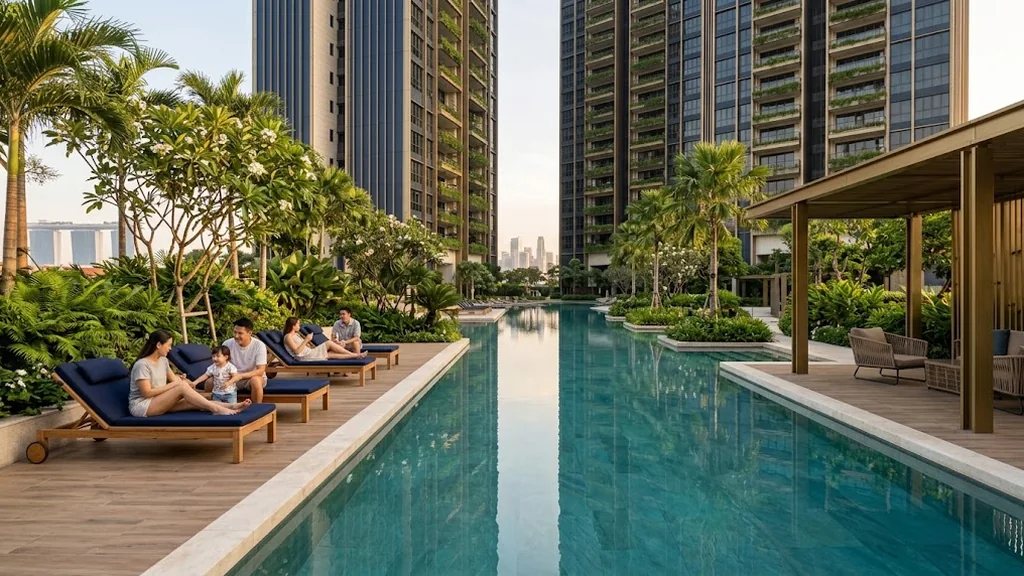
When these steps happen in sync, the buyer experience becomes calmer. You are not rushing to interpret pricing after you’ve already committed emotional energy to a unit type. Instead, you see the numbers when it is still easy to walk away and still easy to adjust your selection criteria.
That calm matters, especially during high-interest launches where demand can move quickly once pricing becomes visible.
Final thought: get the official price list, then decide with clarity
Dorset Gardens is positioned as an upcoming condominium on Dorset Road in District 8 near Farrer Park MRT, backed by a UOL-led consortium tied to a Dorset Road GLS site with a reported bid award of S$524.3 million. The project is described publicly as a 99-year leasehold development with around 428 homes across two 27-storey towers, though configuration details should be treated as planned unless and until confirmed through official developer materials.
In that context, Dorset Gardens pricing updates and direct developer price list registration are not just “nice to have.” They are the fastest path to accurate numbers and a realistic view of unit availability. Do the registration promptly, use the price list as your first filter, and pair it with a showflat appointment so you can decide based on both financial fit and real-world livability.
If you want, tell me what you prioritize most (near MRT, larger layout, higher floors, budget band, or rental potential), and I can suggest a practical way to compare what you receive from the price list without overthinking it.